About Bed Bugs - The Signs

If left to spread, a bed bug infestation can become near impossible to control. These pests are known as one of the hardest to kill, with no effective DIY methods of eradication.

Bed bugs reproduce at an astonishing rate. Within weeks, a single bed bug introduced to a property can result in a colony of hundreds. The sooner an infestation is noticed and reported, the more manageable it is and the quicker effective eradication can be achieved.
YouTube video
Signs of Bed Bugs

What Do Bed Bugs Look Like?

Bed bugs are small but the pest control industry's biggest parasite. They feed only on blood and have evolved to live close to their host.

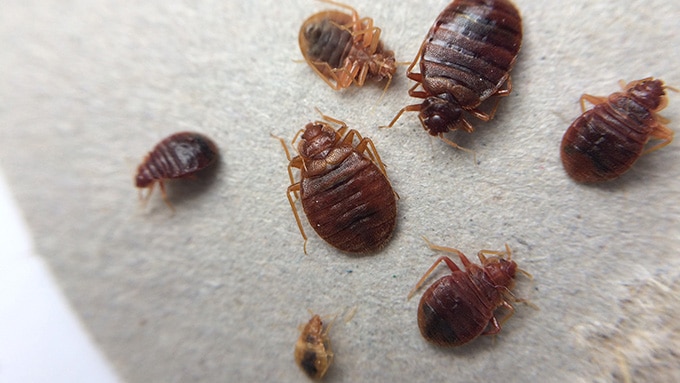
Once grown, the bugs are around 4-5mm in size and red or brown in colour. A common misconception is that they are invisible to the naked eye - they are not. It can be hard to spot them because they hide in tiny cracks and can flatten themselves to the thickness of a piece of paper. After feeding, they appear fatter and darker, resembling the shape of an apple pip.

Bed bugs at different life stages showing their range in size and colour

Other Evidence of Bed Bug Infestations

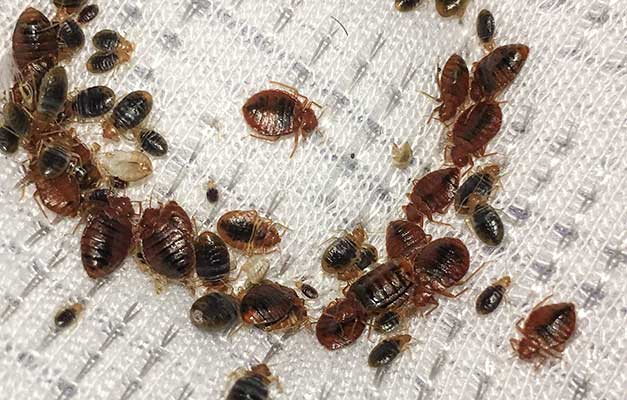
DroppingsBlack faeces (waste blood from the host) on bedding, mattresses and headboards. Heavy infestations leave streaks
SightingsAdults range from apple-pip size to small fingernail. Nymphs are tiny and colourless before they feed
Shed CasingsStatic empty shells that look like bugs. A reliable sign an infestation has been present for some time
SmellIn later-stage infestations bed bugs give off a strong, sweet odour not unlike almonds
Bite MarksOften in groups of three or in lines on torso, neck, arms or upper legs. Reactions vary widely from person to person
Blood SpotsSmall rust-coloured spots on bedding from crushed bugs after feeding

Why Act Fast

  • Bed bugs double in number every few weeks
  • DIY products rarely reach hidden eggs
  • Travel and visitors spread them between properties
  • Heat treatment can clear an infestation in a single day

Common Hiding Places

  • Mattress seams, box springs and bed frames
  • Behind headboards and inside drawer joints
  • Skirting boards, carpet edges and curtain hems
  • Sofas, armchairs and other upholstered furniture

More About Bed Bugs

Guides & Advice